Our Products
MIL-STD-1553 Analyzer
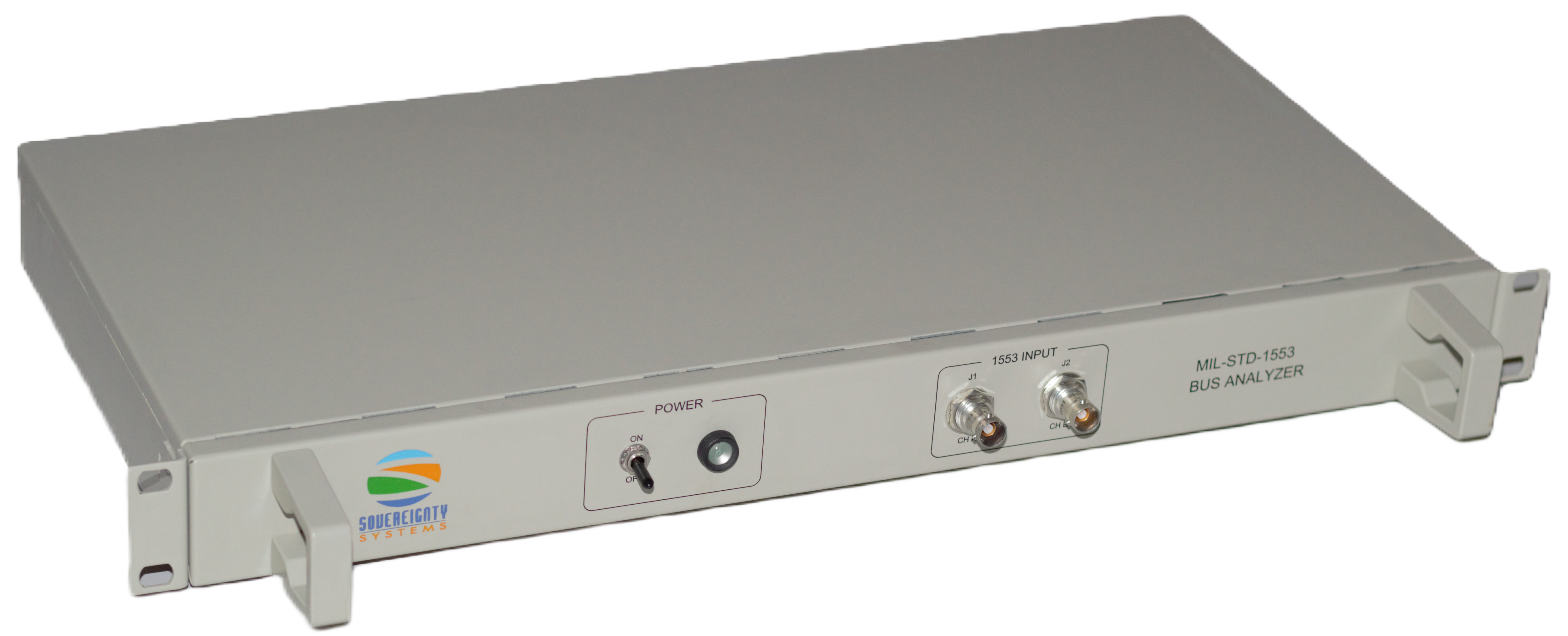
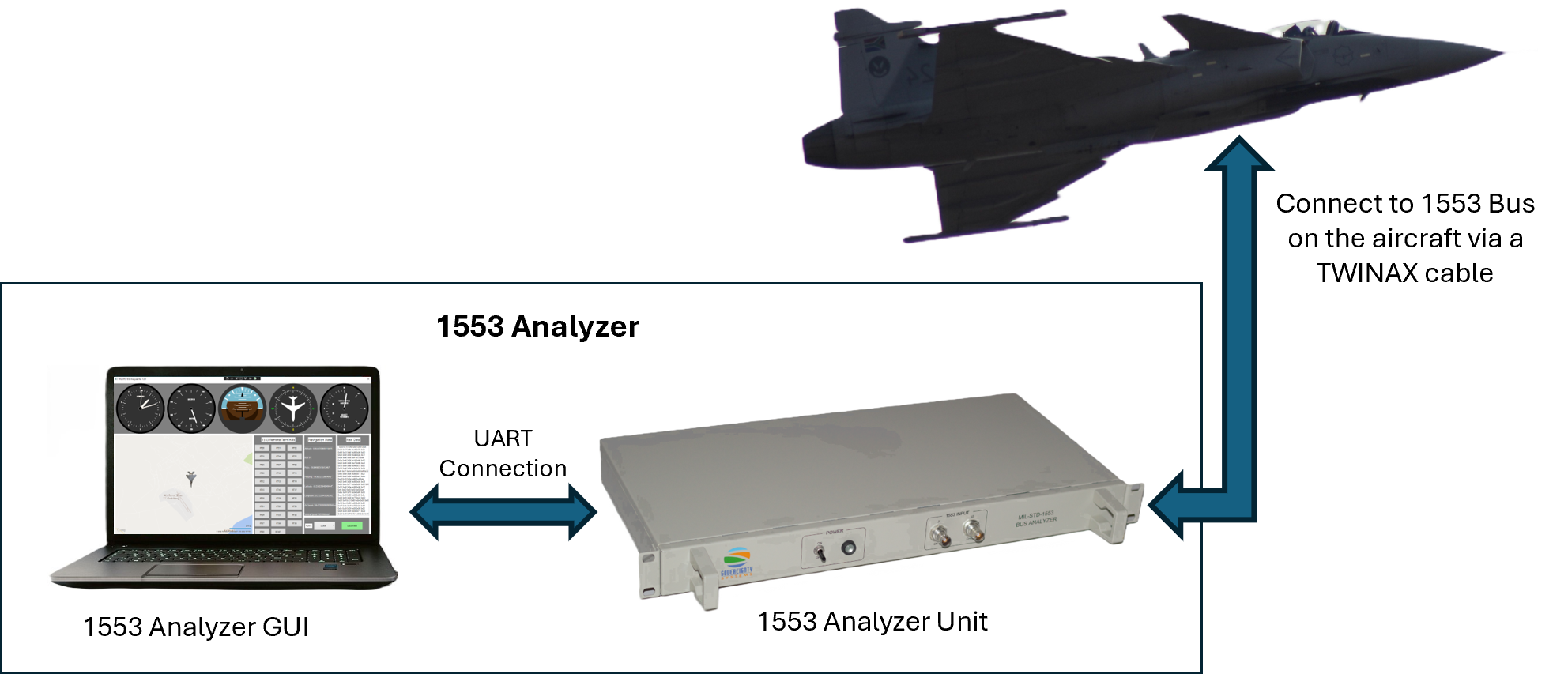
The 1553 Analyzer product is a unit that behaves as a Remote Terminal on the 1553 bus. It captures navigation information from the bus. The information is analyzed and displayed on a user interface. The 1553 Analyzer consist of a neatly packaged standard 1U unit ready to be rack-mounted, and a software running on a laptop.
MIL-STD-1553 Analyzer Software
The Analyzer software provides the following navigation parameter information:
- Latitude and longitude
- Roll, Pitch and Yaw
- Heading
- Altitude
- Air Speed
- Time and Date
The software also provides:
- Raw data information
- Specific Remote Terminal information
- Map display
- Navigation gauges
The Analyzer software provides the following navigation parameter information:
- Latitude and longitude
- Roll, Pitch and Yaw
- Heading
- Altitude
- Air Speed
- Time and Date
The software also provides:
- Raw data information
- Specific Remote Terminal information
- Map display
- Navigation gauges
.PNG)
Control PCB
This PCB contains a SOC chip. The firmware and software was developed for the SOC, which forms part of the core functionality of the Control PCB. This PCB interfaces with different components and controls them by feeding specific digital signals each component.
This PCB contains a SOC chip. The firmware and software was developed for the SOC, which forms part of the core functionality of the Control PCB. This PCB interfaces with different components and controls them by feeding specific digital signals each component.
System Diagnostics Software
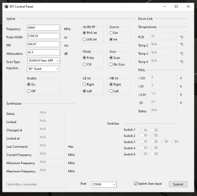
This software runs on a PC/Laptop and allows the user to make certain selections on the Control PCB and monitor feedback signals through the GUI.
This software runs on a PC/Laptop and allows the user to make certain selections on the Control PCB and monitor feedback signals through the GUI.


The activities involved with the development of the Control PCB comprises:
- Hardware Design (schematics and PCB)
- Embedded Software
- Firmware running on a Xilinx System on Chip (SoC).
The Control PCB interfaces to several devices which includes the following standards:
- RS232
- SPI
- I2C
- 1-Wire
- TTL Outputs
- TTL Inputs
The System Diagnostics Software runs on a PC/Laptop and allows the user to make certain selections on the Control PCB and monitor feedback signals through the GUI.
- Hardware Design (schematics and PCB)
- Embedded Software
- Firmware running on a Xilinx System on Chip (SoC).
The Control PCB interfaces to several devices which includes the following standards:
- RS232
- SPI
- I2C
- 1-Wire
- TTL Outputs
- TTL Inputs
The System Diagnostics Software runs on a PC/Laptop and allows the user to make certain selections on the Control PCB and monitor feedback signals through the GUI.
The Pilot Control Unit (PCU)
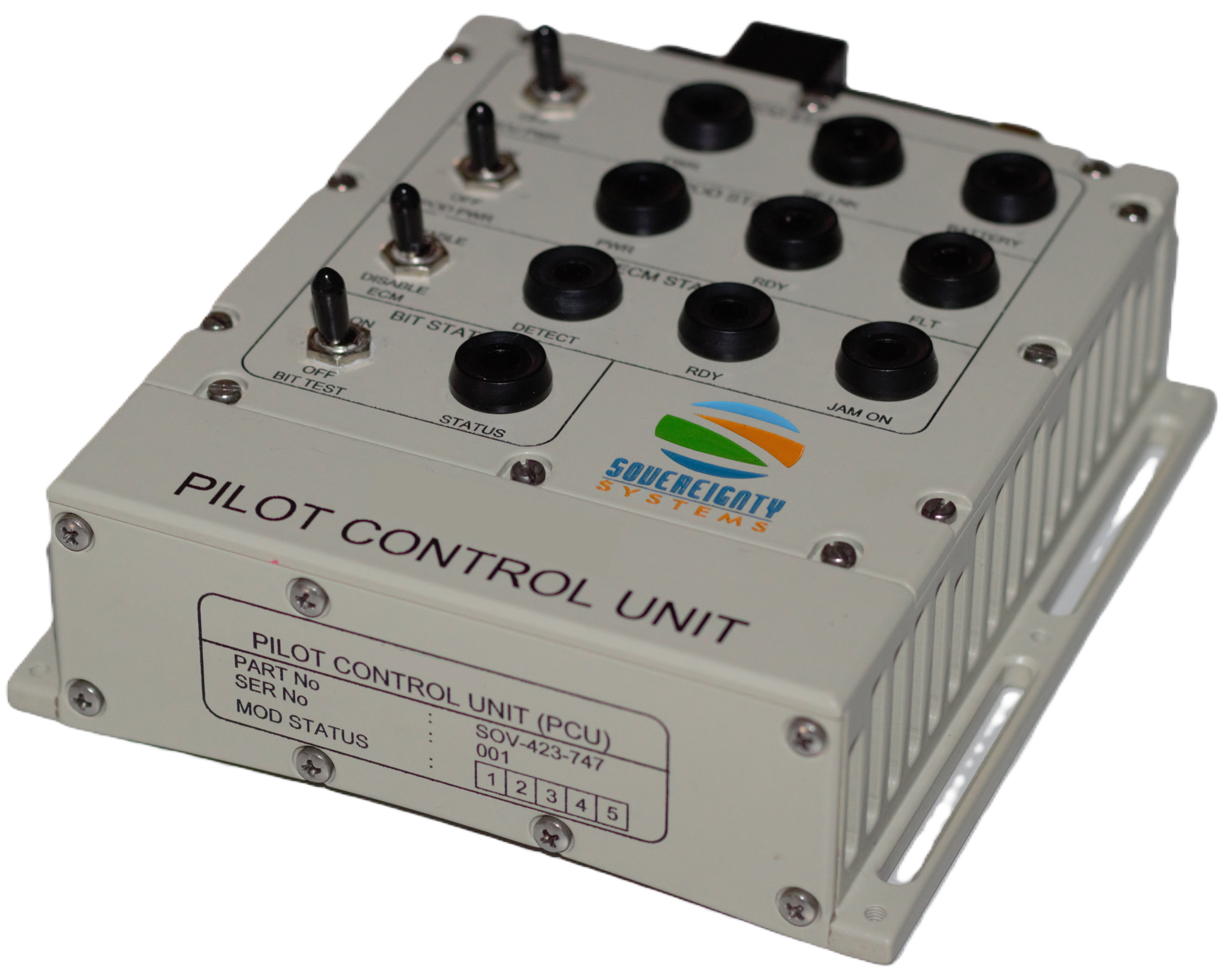
The PCU System is a wireless control and communication system designed to provide the pilot with remote control & monitoring of various equipment that is otherwise external to the aircraft.
It comprises two units, Unit 1 is a handheld, battery operated device that provides command and monitoring through a RF command link. Whereas Unit 2 is mounted to the aircraft’s external equipment. It therefore decodes and executes the message from the command link & in turn provide status report via a RF response link to unit 1.
The PCU System is a wireless control and communication system designed to provide the pilot with remote control & monitoring of various equipment that is otherwise external to the aircraft.
It comprises two units, Unit 1 is a handheld, battery operated device that provides command and monitoring through a RF command link. Whereas Unit 2 is mounted to the aircraft’s external equipment. It therefore decodes and executes the message from the command link & in turn provide status report via a RF response link to unit 1.
The PCU is designed with the following specification:
- User-friendly to allow the pilot/operator to easily monitor and take the necessary course of action from the cockpit of the aircraft.
- Having a quick low frequency communication update rate between Unit 1 & Unit 2 such that the pilot can take quick action when required.
- To make provision for the following low-level interfaces via a
mil-spec circular connector:
- Standard RS232
- SPI
- I2C
- Electromechanical switching with 2 feed and 2 return lines
- Battery compartment with ease of access.
- Mil-spec LED indicators and switches for control & monitoring
- RF antenna bracket to keep it in place during flight
- Adjustable RF output power ranging from 21dBm to 30 dBm
- User-friendly to allow the pilot/operator to easily monitor and take the necessary course of action from the cockpit of the aircraft.
- Having a quick low frequency communication update rate between Unit 1 & Unit 2 such that the pilot can take quick action when required.
- To make provision for the following low-level interfaces via a
mil-spec circular connector:
- Standard RS232
- SPI
- I2C
- Electromechanical switching with 2 feed and 2 return lines
- Battery compartment with ease of access.
- Mil-spec LED indicators and switches for control & monitoring
- RF antenna bracket to keep it in place during flight
- Adjustable RF output power ranging from 21dBm to 30 dBm
SDR Based Interception System
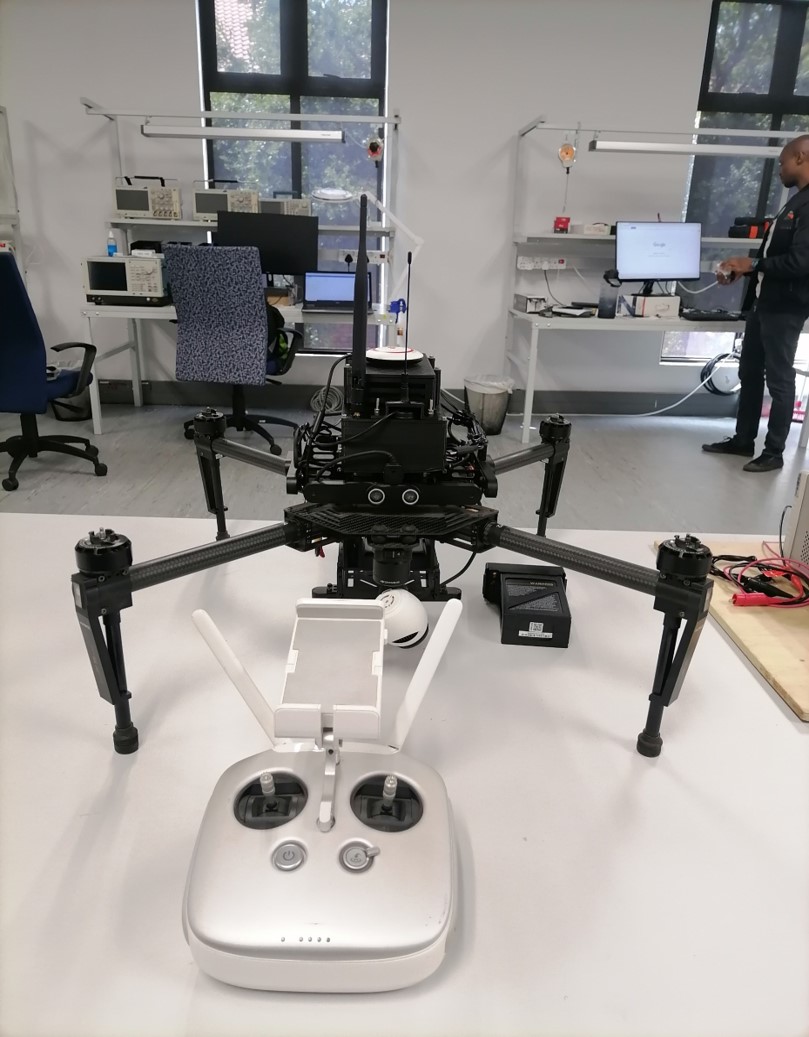
The SDR-based Interception System (SBIS) is drone-mounted payload used to intercept target transmissions from a height advantage. This system comprise the hardware that communicates with a ground station laptop over a Wi-Fi link. The ground station laptop runs a SDR application software that controls the SDR as well monitor signals as and when intercepted.
The SDR-based Interception System (SBIS) is drone-mounted payload used to intercept target transmissions from a height advantage. This system comprise the hardware that communicates with a ground station laptop over a Wi-Fi link. The ground station laptop runs a SDR application software that controls the SDR as well monitor signals as and when intercepted.
Hardware
- Single-tuner wideband full featured 14-bit SDR
- 2.4 GHz/ 5 GHz Comms link
- On-board Rechargeable power source
Base Station/ Application features
- Multiple Virtual Receiver (VRX) with basic radio controls
- Target signal demodulation and results display (waterfall and spectrum displays)
- Remote server with two streaming modes across both LAN and WAN (internet):
- HDR mode support
- Headless server command line options
- SNR Measurement
- Notch filters in the Aux spectrum
- Single-tuner wideband full featured 14-bit SDR
- Covers the entire spectrum form 1kHz to 2GHz
- Contains 3 antenna ports, two which are SMA connectors and operate across the full 1 kHz to 2 GHz range and the third uses BNC connector which operates up to 200MHz.- Intercepts common signal types such as AM, FM, SSB, etc
- 2.4 GHz/ 5 GHz Comms link
- On-board Rechargeable power source
Base Station/ Application features
- Multiple Virtual Receiver (VRX) with basic radio controls
- Target signal demodulation and results display (waterfall and spectrum displays)
- Remote server with two streaming modes across both LAN and WAN (internet):
a) Full IQ and
b) Audio – a streaming mode which provides a very efficient way of displaying a large spectral bandwidth across a network with a limited data throughput- Band Framing
- HDR mode support
- Headless server command line options
- SNR Measurement
- Notch filters in the Aux spectrum

SciChart Application Software
This application reads specific CSV files and plots the information using different types of graphs. SciChart also provides various data analyses tools such as:
- Selecting a specific number of points on the on the plot
- Providing different parameter values for each point on
the plot
- Data Filtering
- Plot point size variation
- Customize and save plot configuration
- Change number of decimal values
This application reads specific CSV files and plots the information using different types of graphs. SciChart also provides various data analyses tools such as:
- Selecting a specific number of points on the on the plot
- Providing different parameter values for each point on
the plot
- Data Filtering
- Plot point size variation
- Customize and save plot configuration
- Change number of decimal values
Information can be displayed in different types of plots:
- 2D
- 3D
- 3D coloured
- Histogram
- 2D
- 3D
- 3D coloured
- Histogram
Data Logger
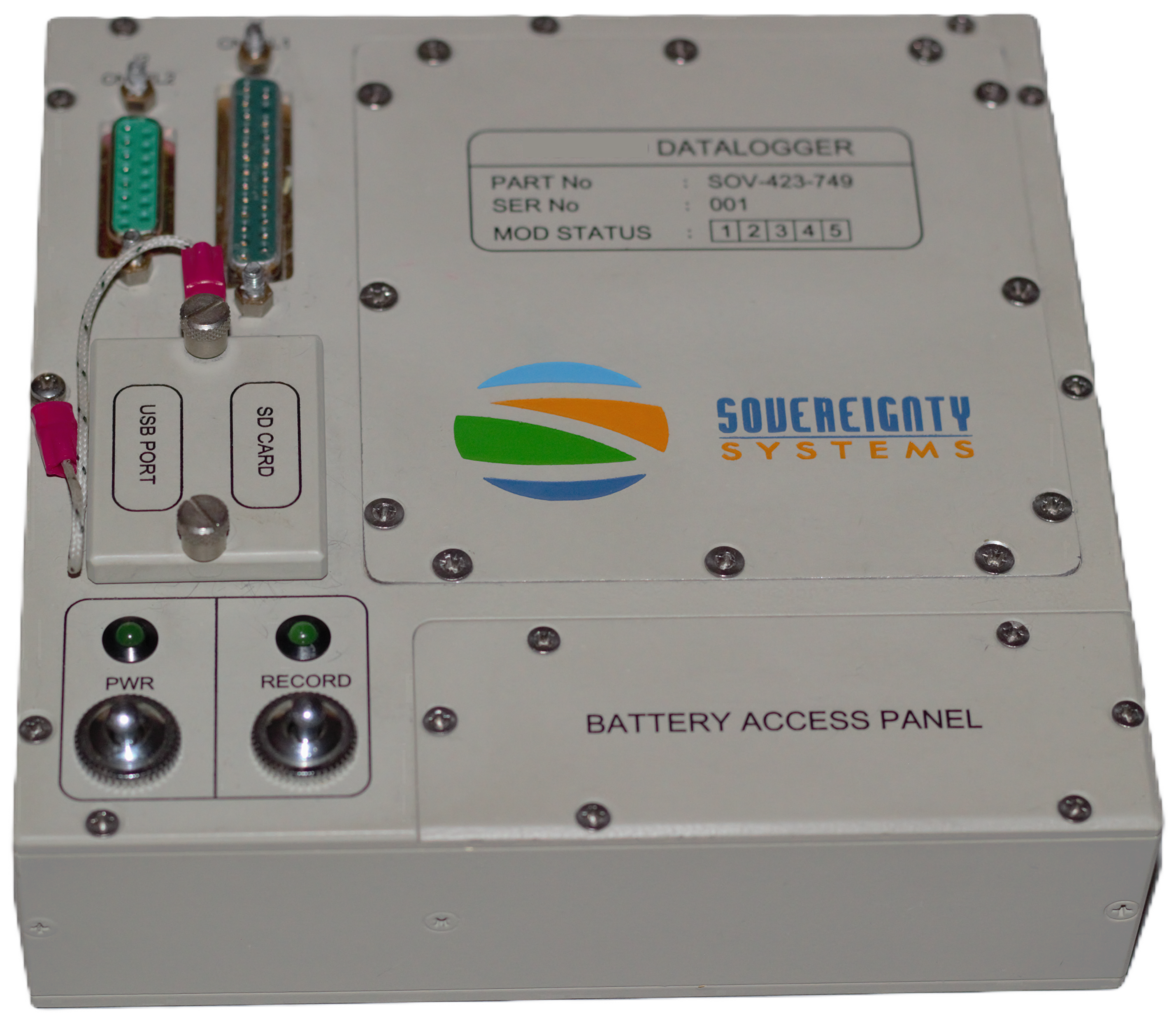
The Data Logger Unit runs from a standard +9V battery which makes it flexible for any remote data recording application.
Sovereignty Systems can adapt the Data Logger Unit firmware to record different parameters according to customer requirements.
The standard Data Logger Unit records the following time-stamped data on a FAT32 Micro SD Card for post-processing on a PC/Laptop:
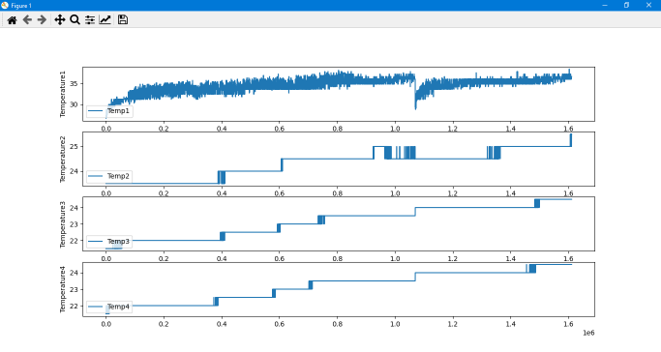
- Temperature (1x Internal, 3x External).
- Airflow.
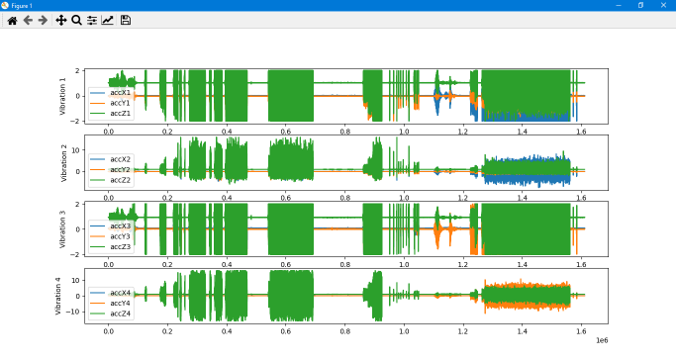
- Acceleration Data (4x 3-axis Accelerometers).
All sampled data is stored every 4ms (250 samples in a second).
The battery voltage (+9V) is constantly monitored, and the SD Card will be closed & unmounted, and the device halted if the battery level falls below +6.4V.
A logfile is created and it is given a filename with the current date e.g. SEPT5_23.TXT.
Data is appended to the file when the recording is stopped in between on the same day.
Two external signals (Power On/Off & Record On/Off) control the Data Logger Unit Power and Modes.
The SD Card is automatically Mounted and Unmounted by the software based on the Record On/Off switch input i.e. “On” causes Mount and “Off” causes Unmount.
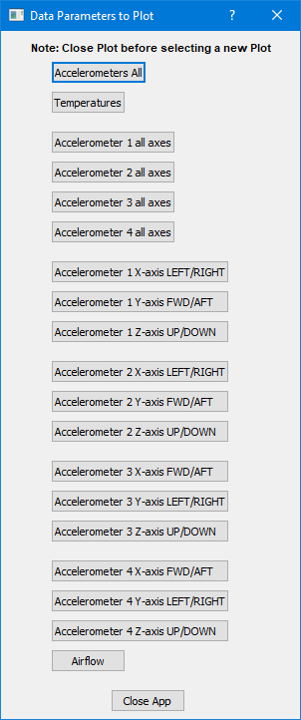
The SD Card is removed, inserted into a PC/Laptop with a Card Slot and the data plotted using Analysis Software.
The Analysis Software was developed as a Python script to allow the user to run it on any Operating System platform i.e. Windows or Linux.
Due to the limitations of the FAT32 file system, the logfile size cannot exceed 4GB.
The Data Logger Unit runs from a standard +9V battery which makes it flexible for any remote data recording application.
Sovereignty Systems can adapt the Data Logger Unit firmware to record different parameters according to customer requirements.
The standard Data Logger Unit records the following time-stamped data on a FAT32 Micro SD Card for post-processing on a PC/Laptop:
- Temperature (1x Internal, 3x External).
- Airflow.
- Acceleration Data (4x 3-axis Accelerometers).
All sampled data is stored every 4ms (250 samples in a second).
The battery voltage (+9V) is constantly monitored, and the SD Card will be closed & unmounted, and the device halted if the battery level falls below +6.4V.
A logfile is created and it is given a filename with the current date e.g. SEPT5_23.TXT.
Data is appended to the file when the recording is stopped in between on the same day.
Two external signals (Power On/Off & Record On/Off) control the Data Logger Unit Power and Modes.
The SD Card is automatically Mounted and Unmounted by the software based on the Record On/Off switch input i.e. “On” causes Mount and “Off” causes Unmount.
The SD Card is removed, inserted into a PC/Laptop with a Card Slot and the data plotted using Analysis Software.
The Analysis Software was developed as a Python script to allow the user to run it on any Operating System platform i.e. Windows or Linux.
Due to the limitations of the FAT32 file system, the logfile size cannot exceed 4GB.